
A guide for workshop leaders and tutors | 4–5 minute read
How to plan your wool supply so you never run out mid-session
If you teach needle felting, supply problems slow everything down.
You run out of brown.
Everyone needs the same grey.
You substitute a colour and the project shifts.
This pack exists to prevent that.
What You Get
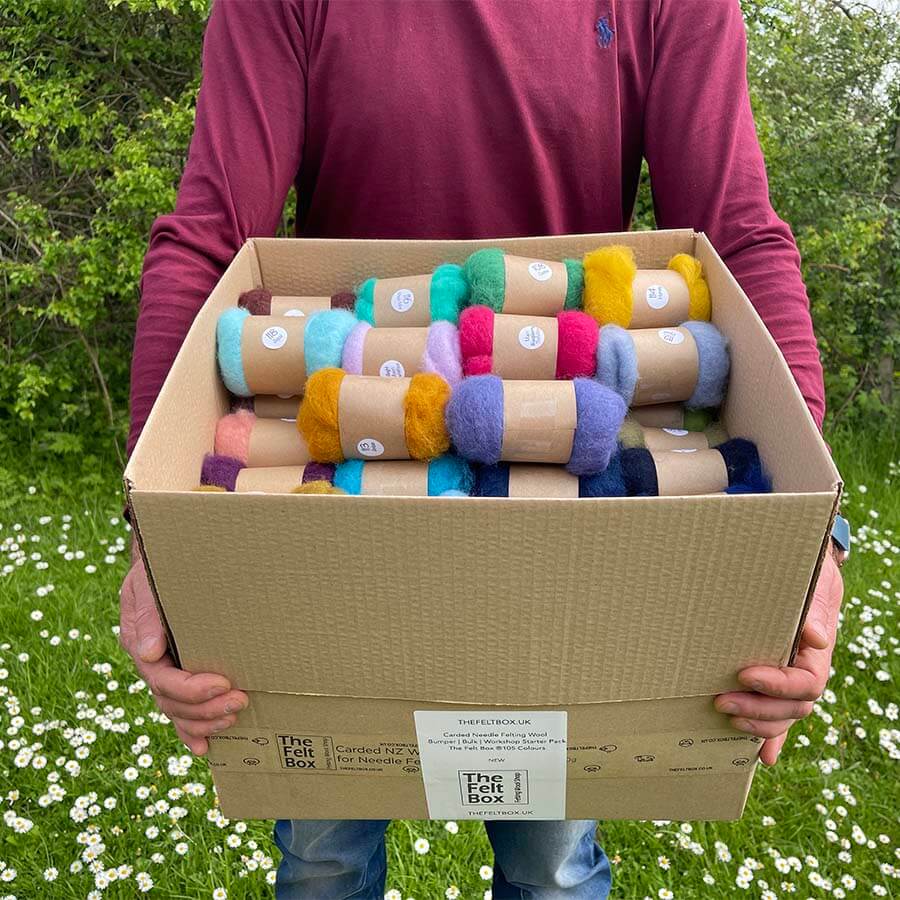
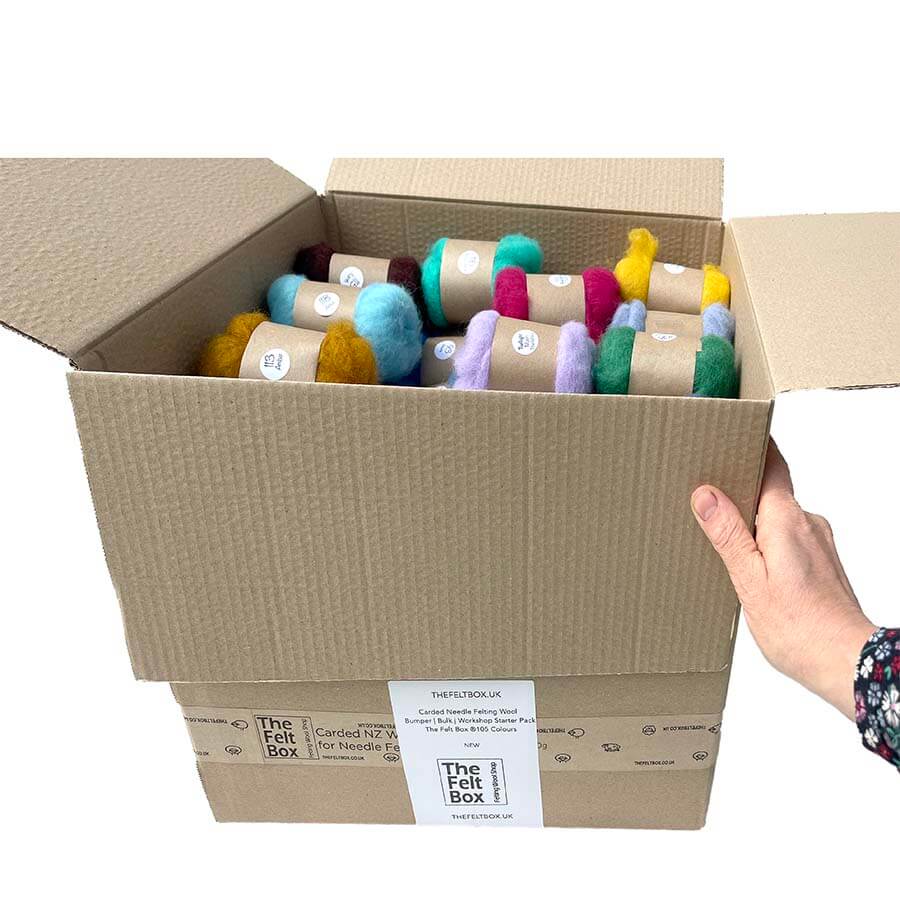
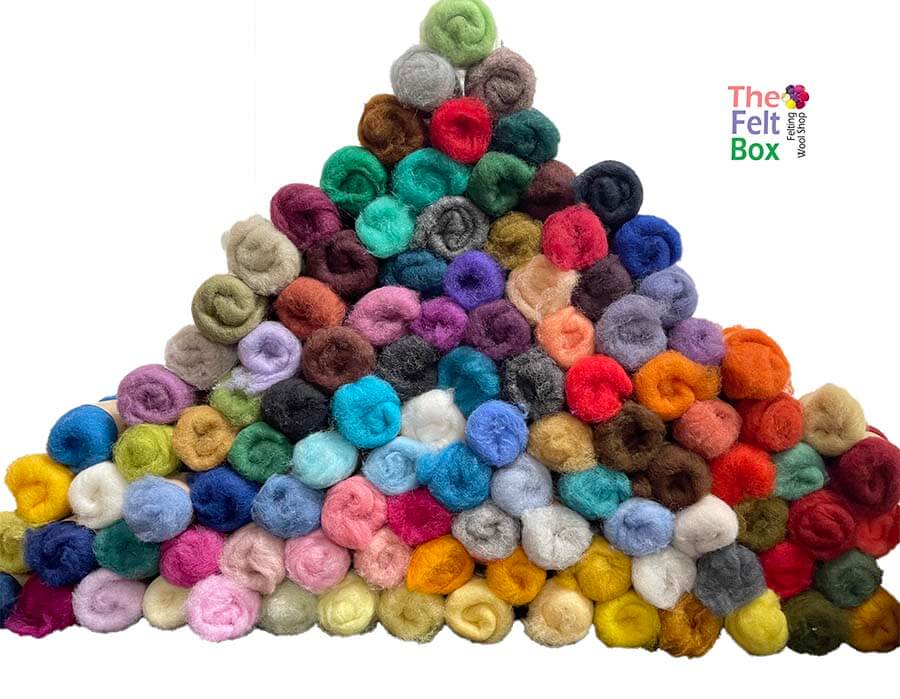
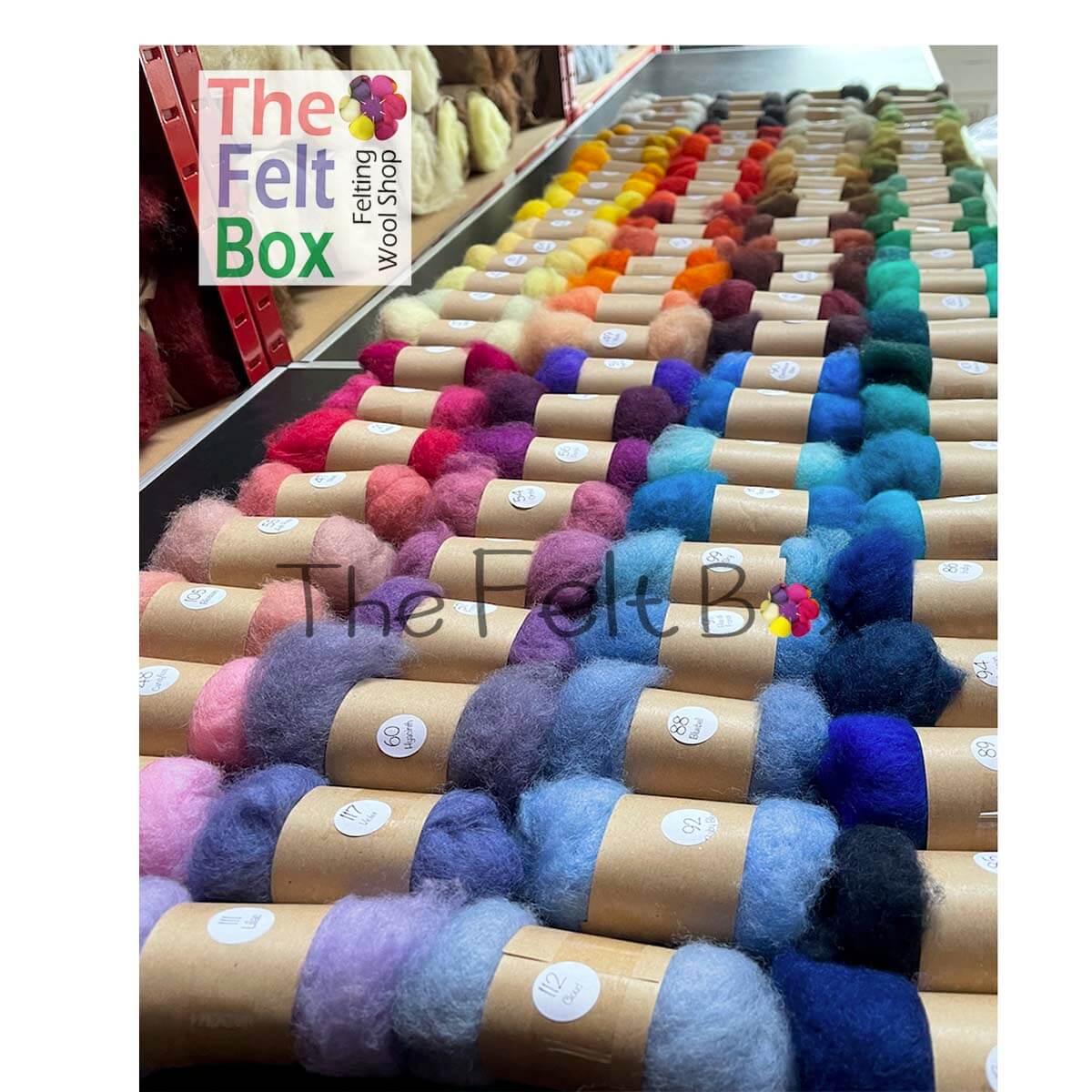
105 repeatable Carded New Zealand shades.
Choose:
- 20g per shade (2.1kg total)
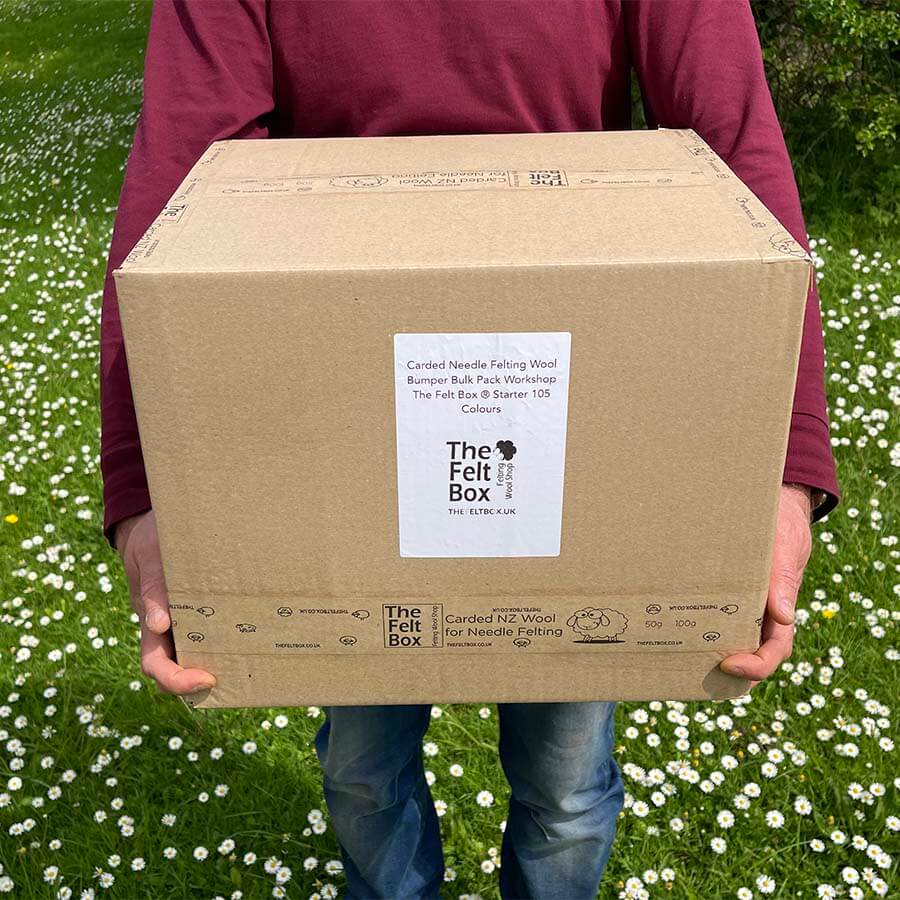
- 100g per shade (10.5kg total)
If you teach regularly, the 100g option is the stable choice. It removes weekly stock anxiety.
Why Carded Works in Classes
Carded batts behave predictably.
They felt quickly.
They hold structure.
They tolerate beginner technique.
That matters in a room of mixed ability.
Fibre details:
- Staple length: 6.5–9.0cm
- 25–31 micron
- Suitable for needle and wet felting
This is not soft merino for surface blending. It is practical wool for building form.
Planning the Maths
Typical usage per student:
- Small animal (8–10cm): 20–25g
- Medium project: 40–60g
- Flat piece: 15–30g
Example:
8 students × 25g = 200g per session
10 students × 30g = 300g per session
10.5kg covers roughly:
- 35–50 similar sessions
- Multiple term-length courses
- Repeat animal workshops without colour gaps
That reduces reordering and keeps your teaching flow steady.
20g vs 100g
20g per shade
- Trial workshops
- Short courses
- Colour exploration
100g per shade
- Weekly classes
- Schools
- Repeat designs
- Kit production
If you know you will reuse foxes, dogs, hares or Highland cows, the 100g option makes sense.
Restocking and Consistency
These shades sit within our core Carded NZ range.
You can reorder individual colours.
Shades are repeatable.
Photos match real wool.
That consistency matters when students expect the same results term to term.
Full fibre and shade details: Carded NZ Wool Colour Chart & Fibre Guide
Who This Is For
- Workshop leaders
- Adult education tutors
- Schools
- Studio teachers
- Kit designers
If you are running more than one class, this becomes a planning tool.
The usual workshop problem is not technique.
It is running out of the colour everyone needs.
A full working range removes that variable.
The Felt Box · thefeltbox.co.uk · 160 colours. One brand. Built from scratch.